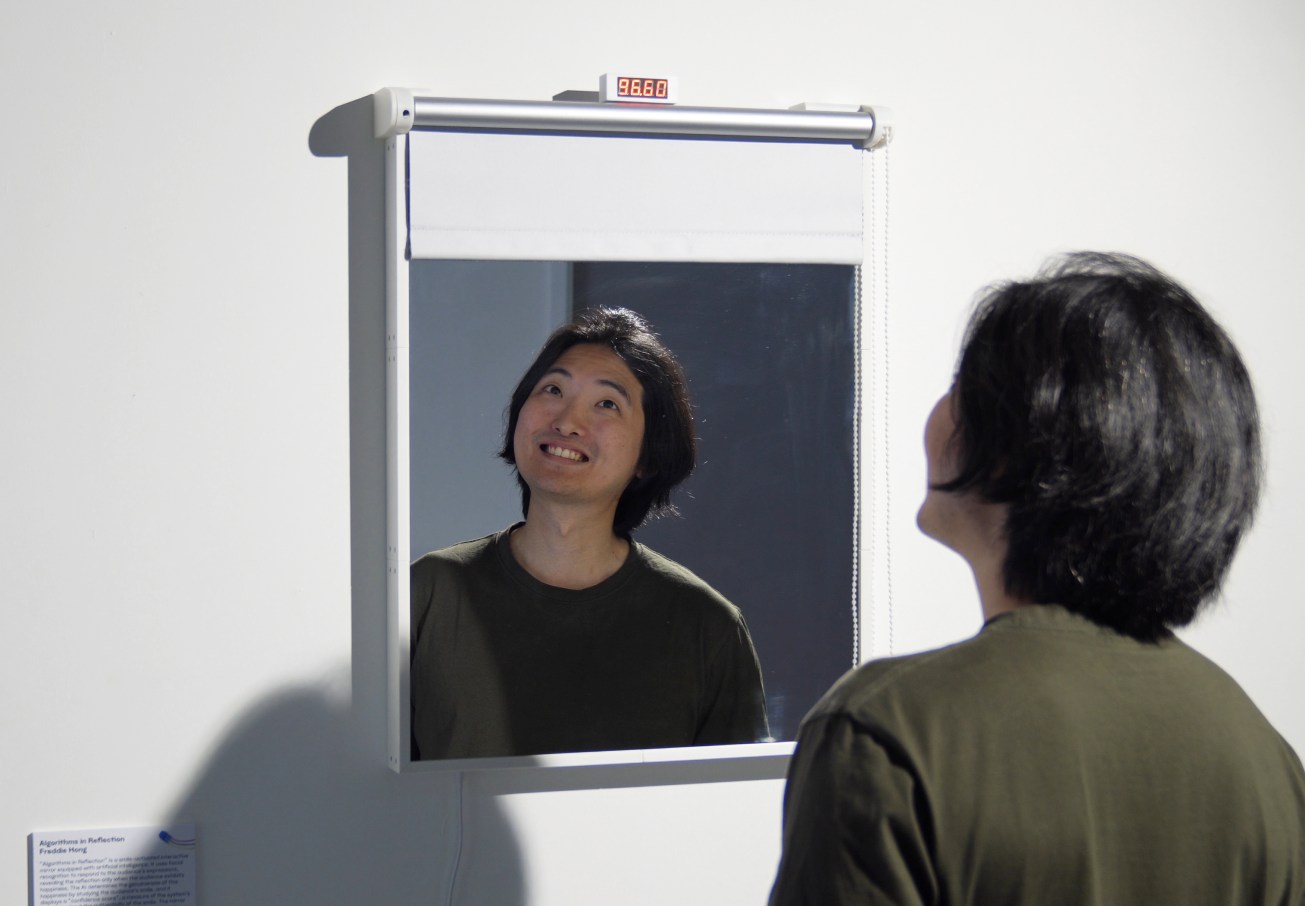
48 x 76 x 5 cm
AI-equipped interactive mirror that only allows you to
see yourself when you express happiness
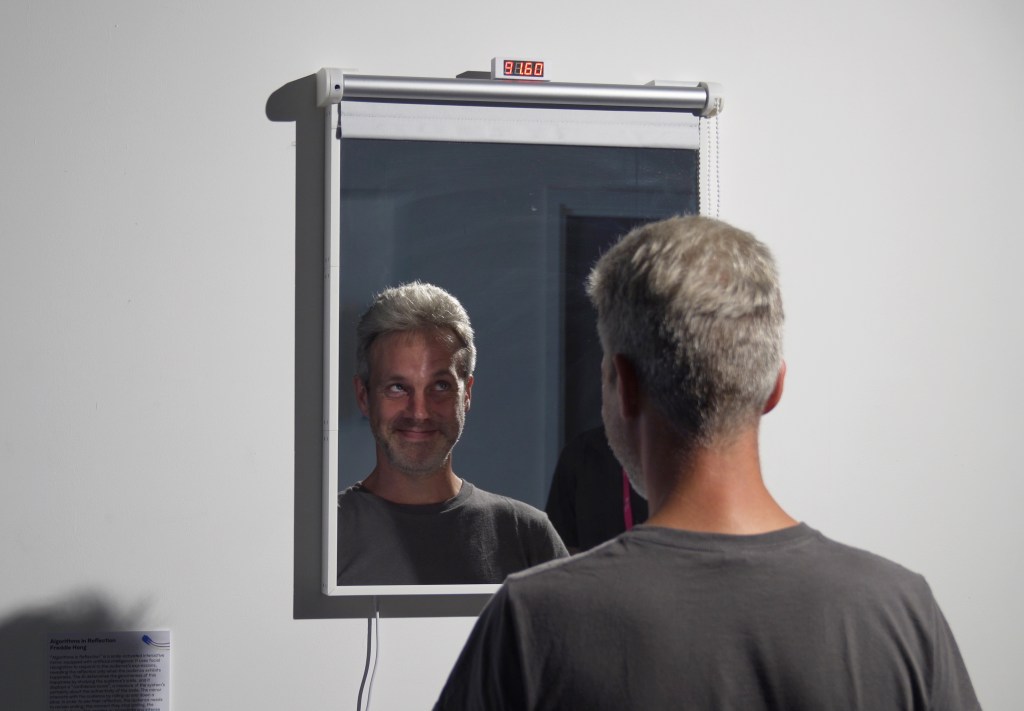
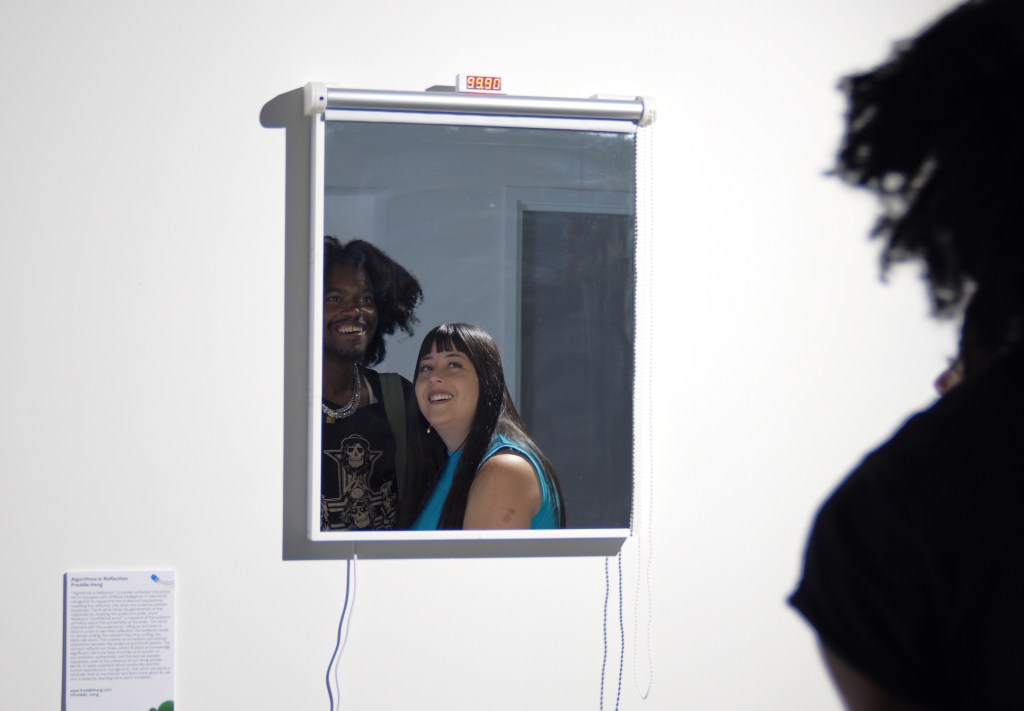
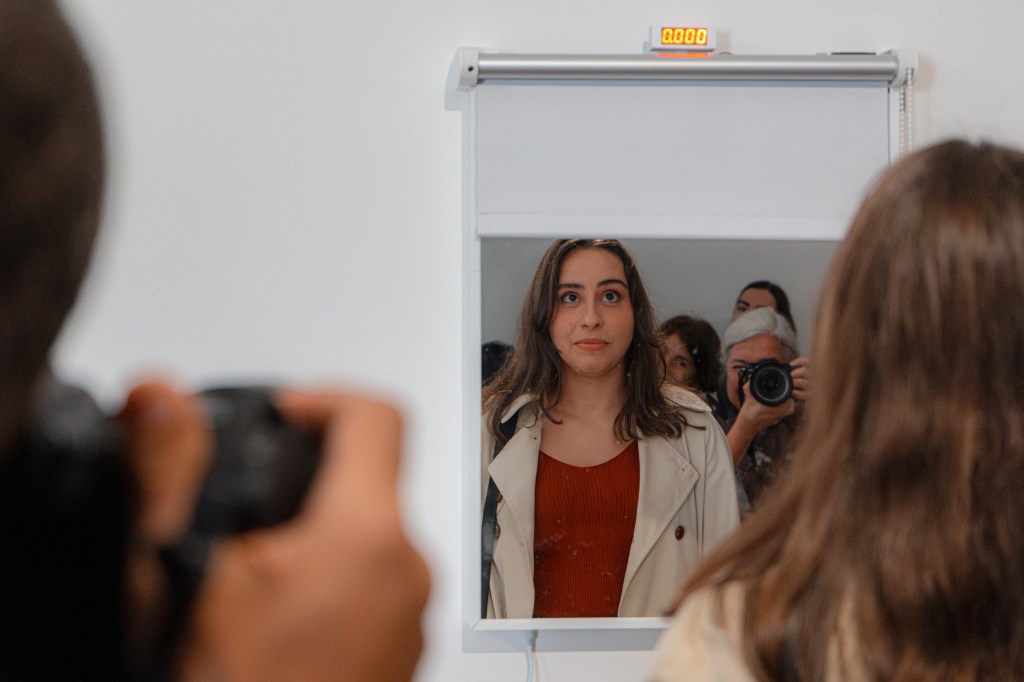
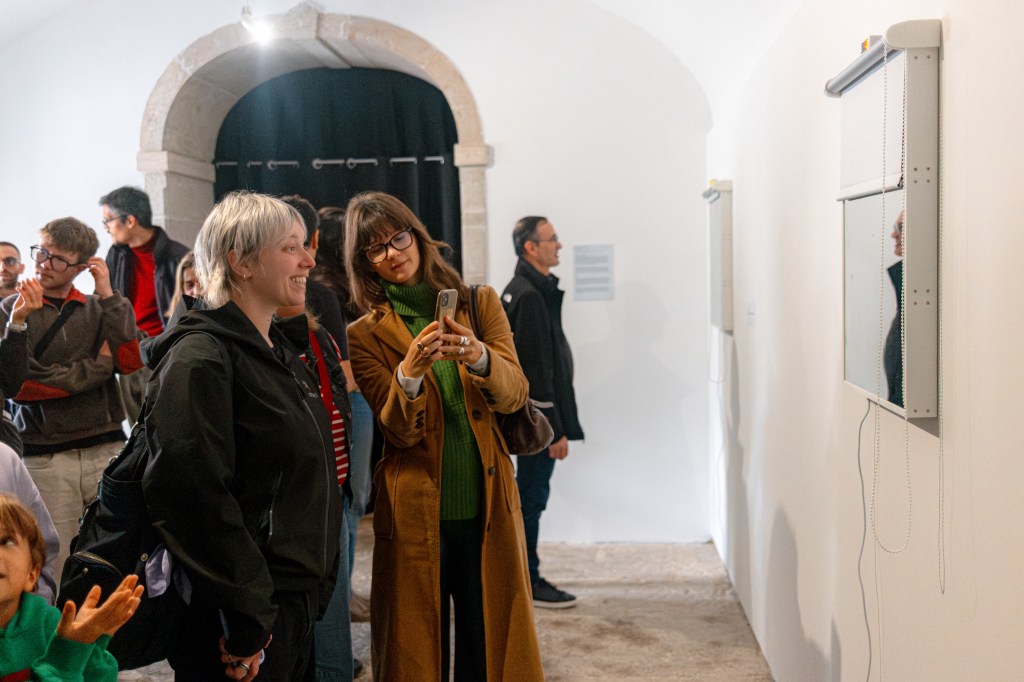
Algorithms in Reflection is a series of two interactive mirrors with embodied AI that responds to specific facial expressions, one reacting only to happiness, the other to sadness. To see the reflection, the audience must perform the emotion to the mirror and maintain it. The motorised blind will lift to reveal their face. If they stop, it falls and the reflection disappears.
The work began as a response to a lived experience. At a UK visa centre in 2017, what was once a human-to-human process of taking a photograph had been replaced by a machine. The automated photography booth repeatedly failed to recognise my eyes, and I had to force my expression to comply with its standards. That encounter of being unseen and unrecognised by a system became the seed of the series. The mirrors are the culmination of that inquiry.
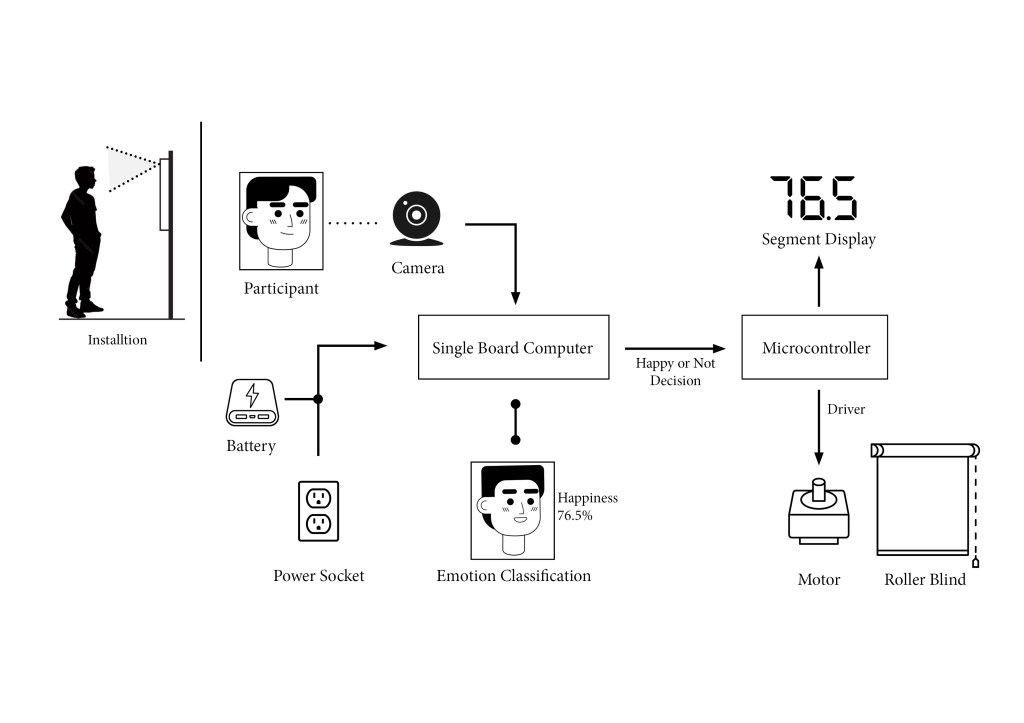
We are already accustomed to expressing emotion functionally in social interactions, whether genuine or not. But does it feel different when we must convince AI? The work creates an immediate and immersive exchange where the AI assesses the viewer’s expression and generates a confidence score, measuring its certainty about what it sees.
In 2025, the series was completed with the addition of a sadness mirror. These two opposing emotions highlight how differently we are trained to perform our emotions. Smiling is socially encouraged such as in job interviews, meetings, and dinners, while sadness is concealed. Placed together, the two mirrors invite us to see something in our own reflection, that visual emotional expression may not simply be feeling, but the product of long social training. The AI does not know this of course. It simply reads faces against a dataset of labelled human expressions, yet in doing so holds up a mirror to our own conditioning, revealing not just how we feel, but how we have learned to show, hide, and perform emotion throughout our lives.
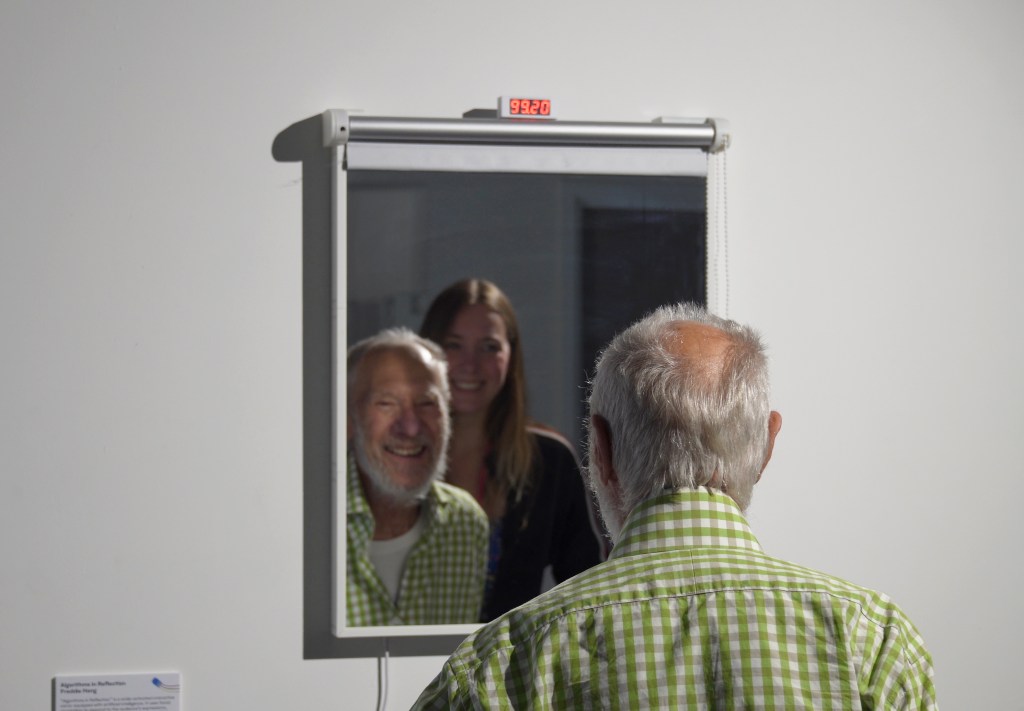

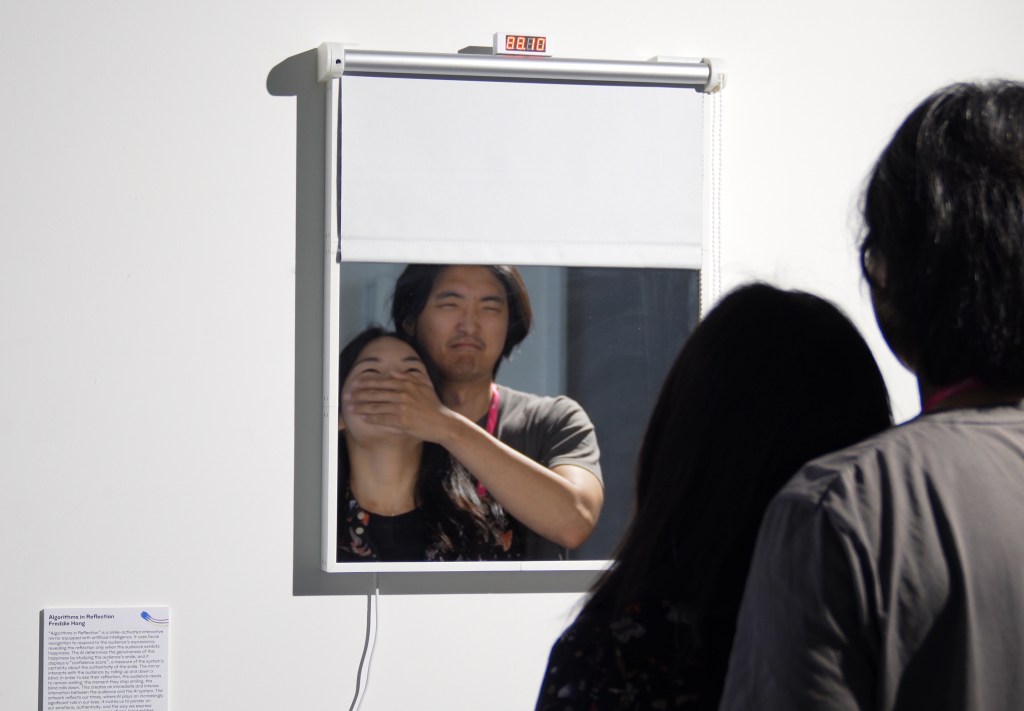
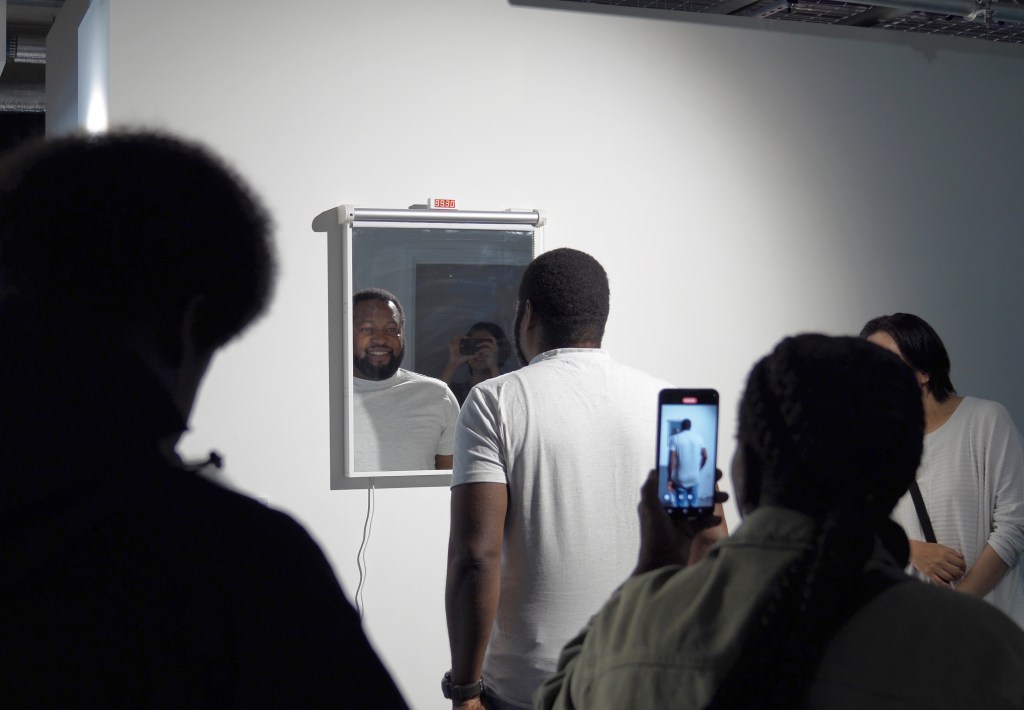
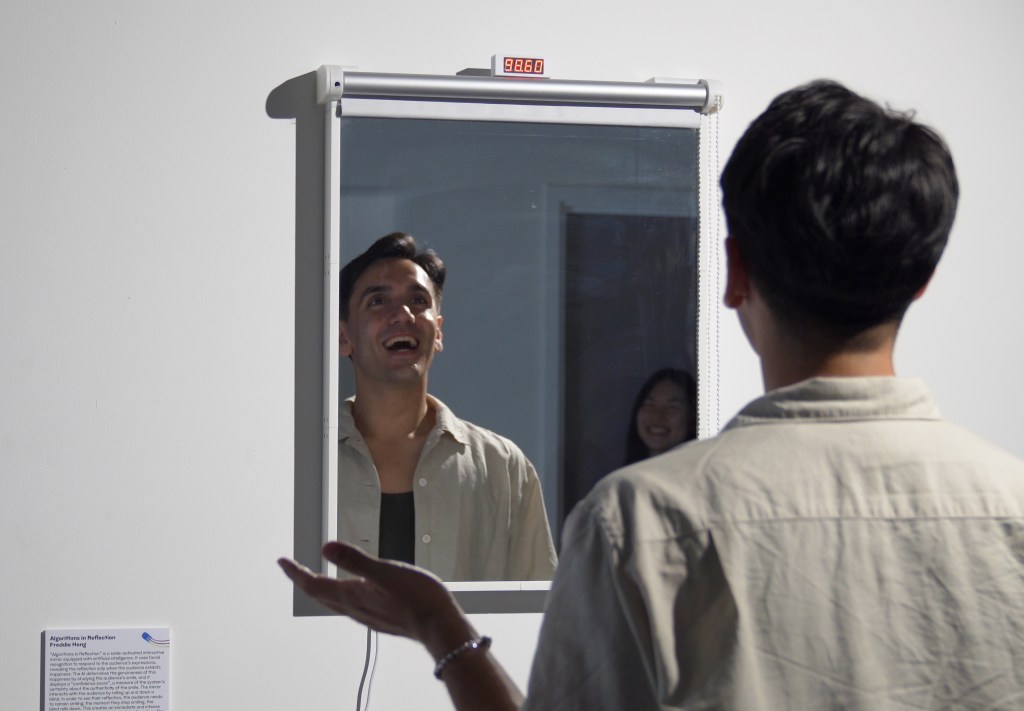
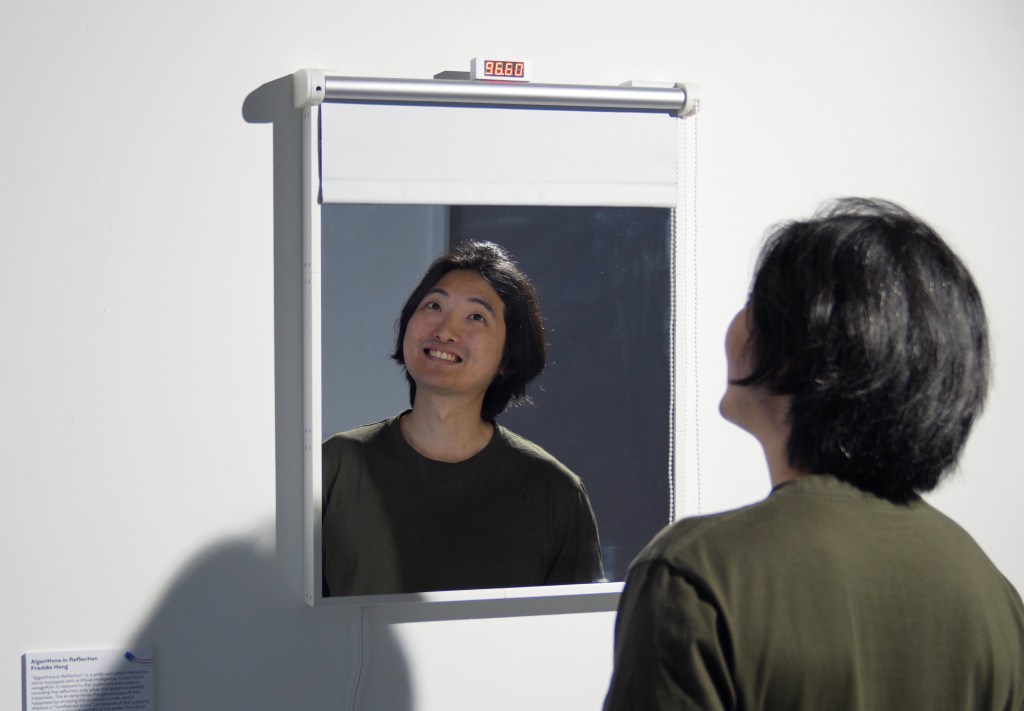
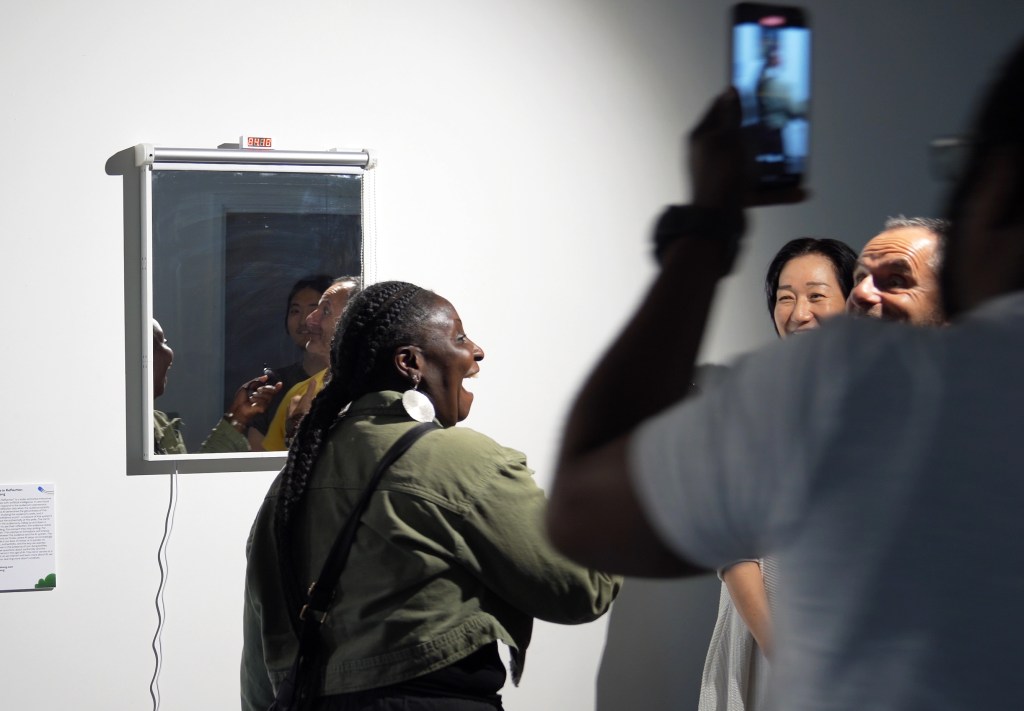
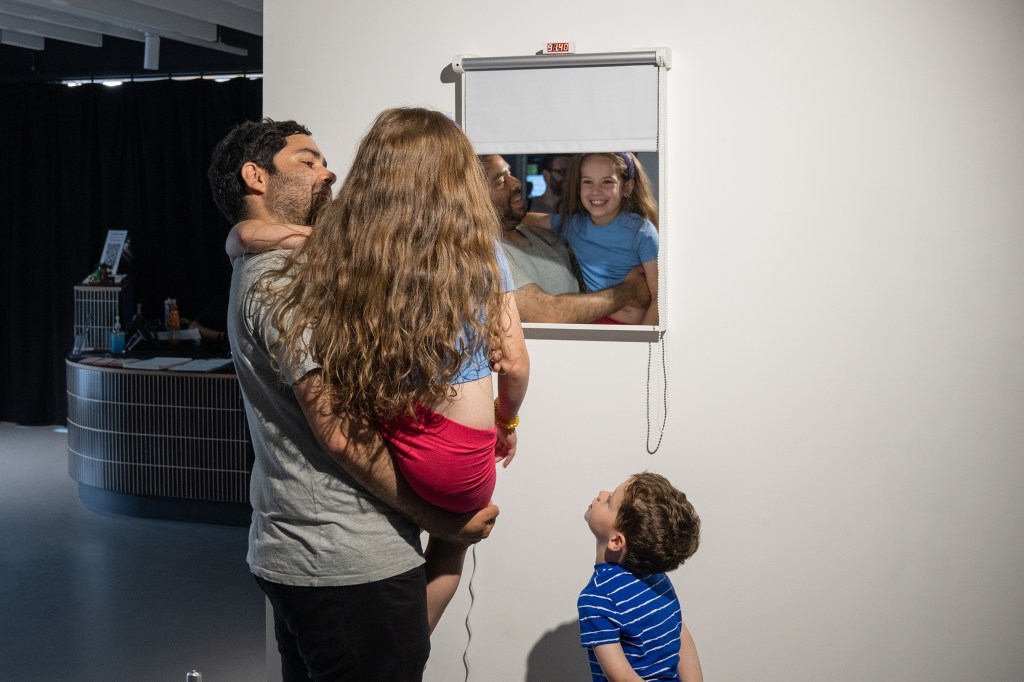
Peckham Digital, 2024
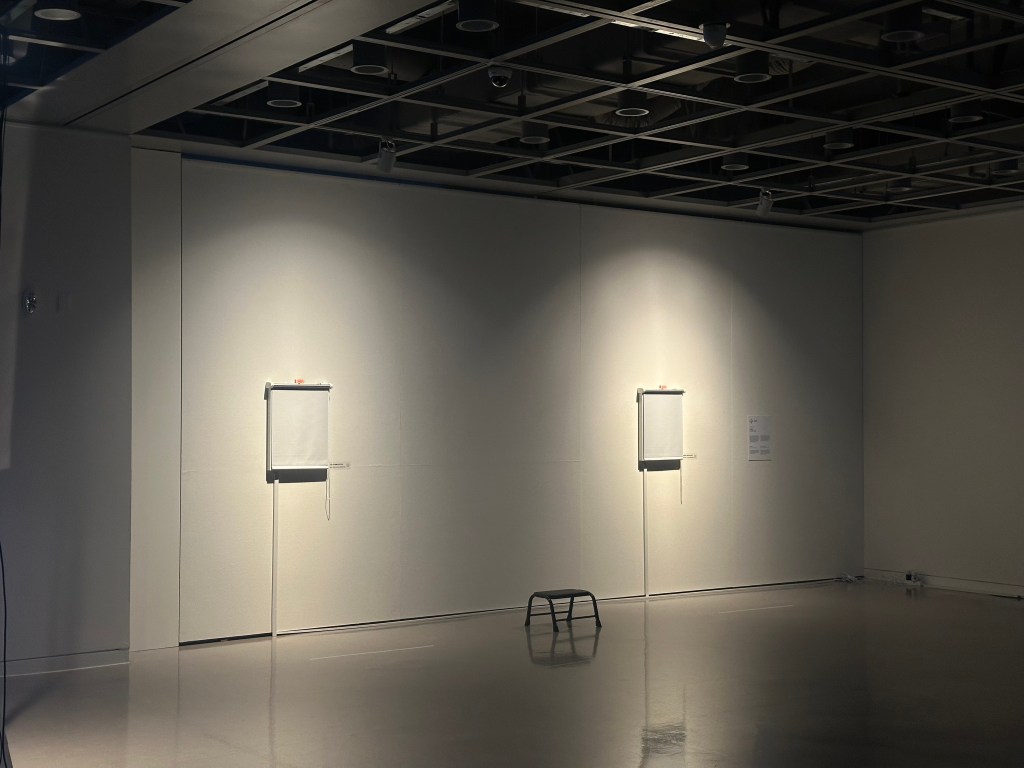
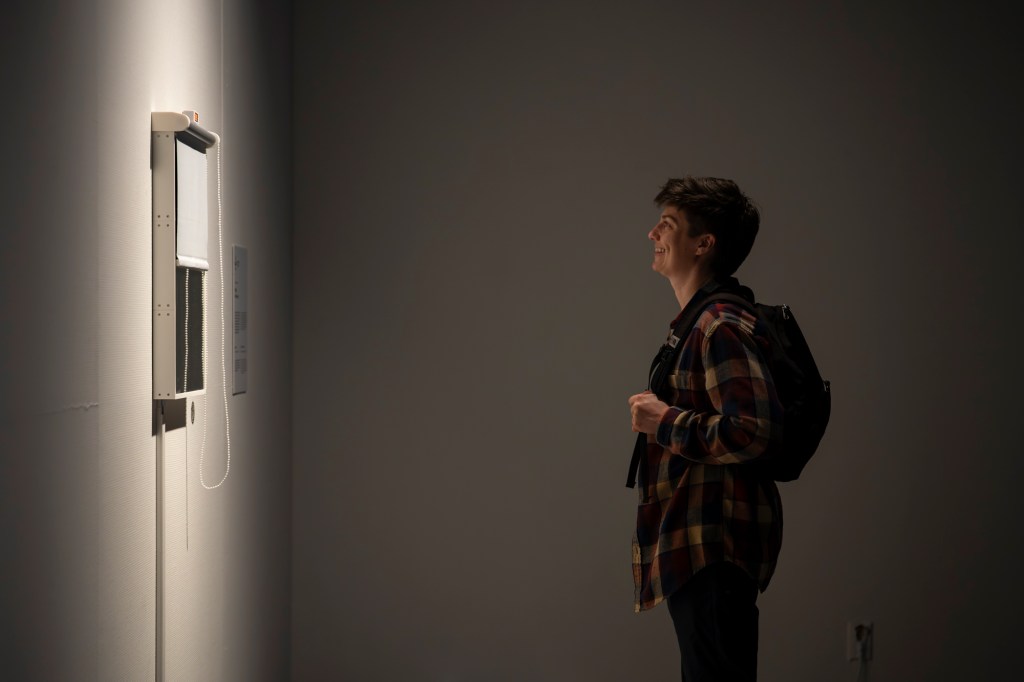
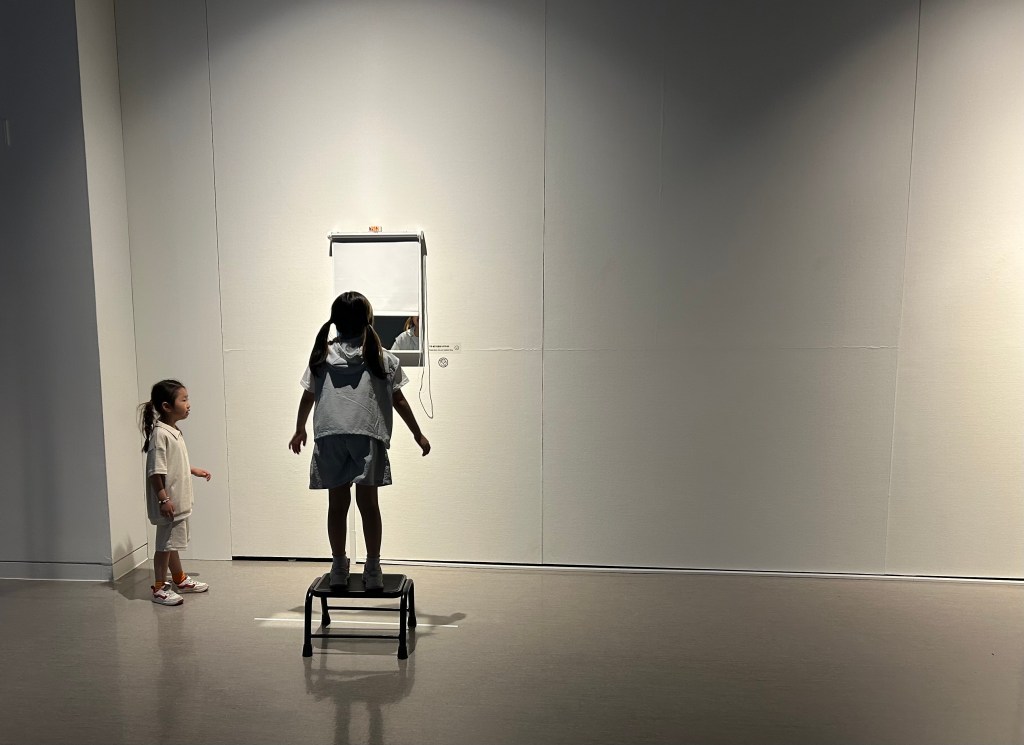
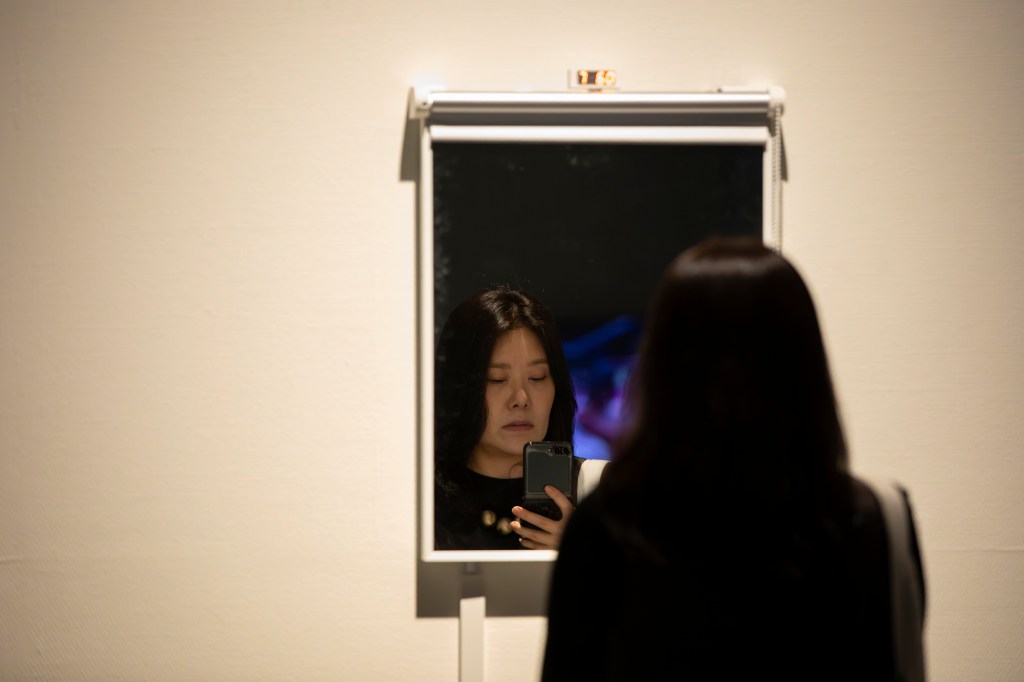
ISEA 2025, Seoul
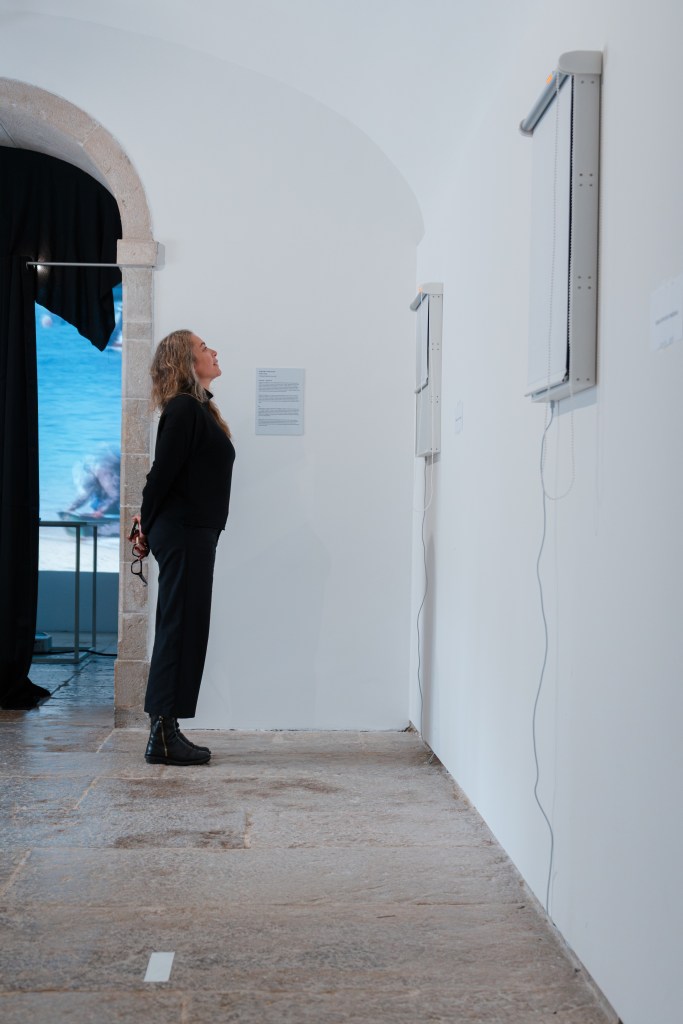
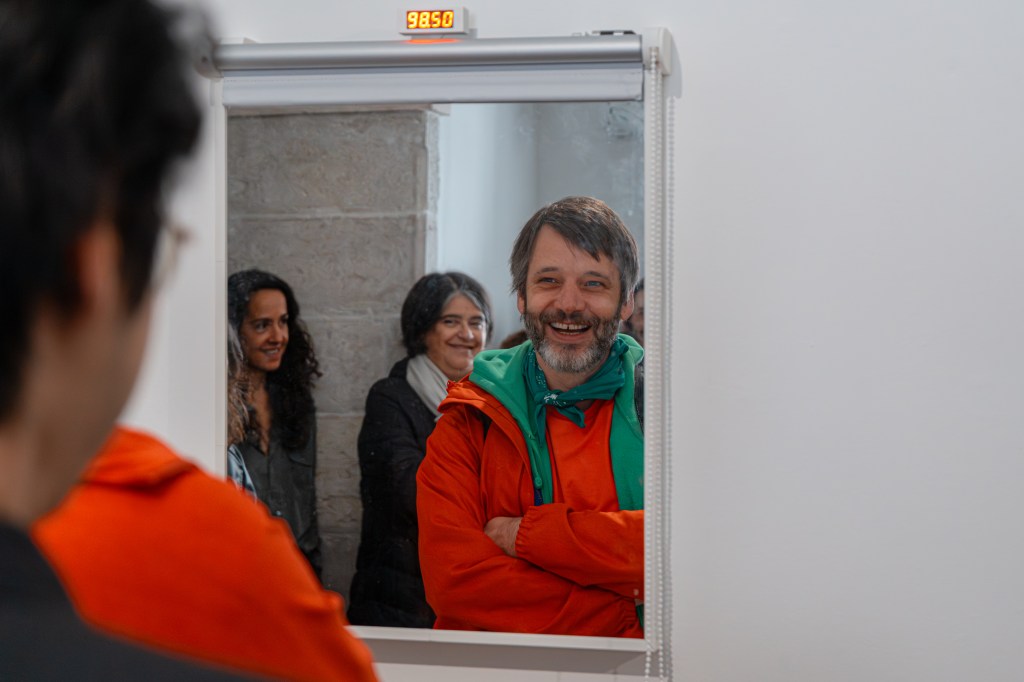
Trafaria Digital Art Festival, 2025
Technical Specification
Hardware
- The mirror is a hangable artwork with all the electronics embedded inside a sealed structure.
- It uses a stepper motor to roll the blind up and down. The system is controlled by single board comptuer and mcirocontorller connected to Camera and a driver.
- The hardware operates in low DC voltage of 5v and 12v
- The hardware system is stable and it was rigorously tested for four months in a real exhibition environment without interruption.
Software
- AI control is powered by a Convolutional Neural Network (CNN) trained on the FER-2013 dataset, which comprises approximately 30,000 faces.
- Program only detects the largest face in the camera’s view, prioritising that person’s expression as the main focus, even when other individuals are present in the background.
- The working distance of the mirror is approximately between 40 cm to 110 cm
- Operates entirely offline in real-time, independent of any external connections, and does not record or store any data.
- The software system is stable and it was rigorously tested for four months in a real exhibition environment without interruption.
 Freddie Hong